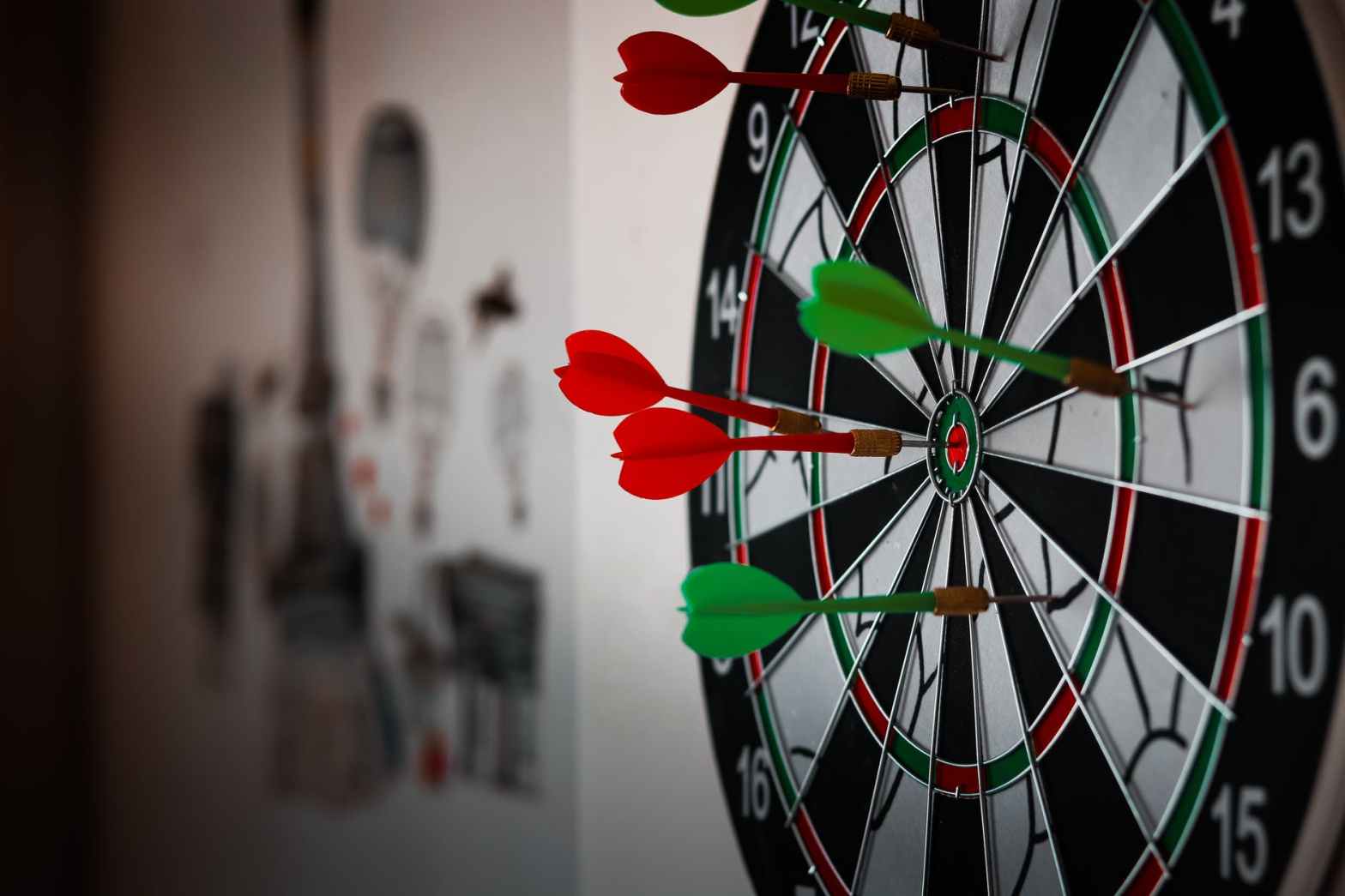
Oftentimes, the terms “ accuracy “ and “ precision “ are used interchangeably, but their meanings are anything but similar. Precision references the repeatability of a desired outcome, while accuracy defines how close an outcome or measurement is in reference to a standard value.
Consider the diagrams below:
Low Accuracy / Low Precision

The bullseye represents a standard ( or perhaps theoretical ) point of reference. The measurements, experimental results, or outcomes are represented by each “ x “ on the target. As we can see, the results are very random, and thus, unreliable.
High Accuracy / Low Precision

The second image shows measurements that are very close to a standard value. Unfortunately, each data point is positioned randomly in relation to the others.
Low Accuracy / High Precision

The results here are very replicable, but the values being recorded are off-the-mark.
High Accuracy / High Precision

The measurements made here are both repeatable and accurate, and this is an indication that an experiment is going very well.
 RENAISSANCE PHYSICS