
The basic rules of exponents state that some number ( a ) raised to the ( x ) power is equal to ( y ). For example, ( 2 )( 2 ) = 4. This can also be expressed as ” two squared ” = 2^2. Likewise, ( 2 )( 2 )( 2 ) =Continue reading “MATHEMATICS: A Review of Logarithmic Functions and Exponential Math”
Author Archives: George Tafari
ELECTRICITY: Series and Parallel Electrical Circuits
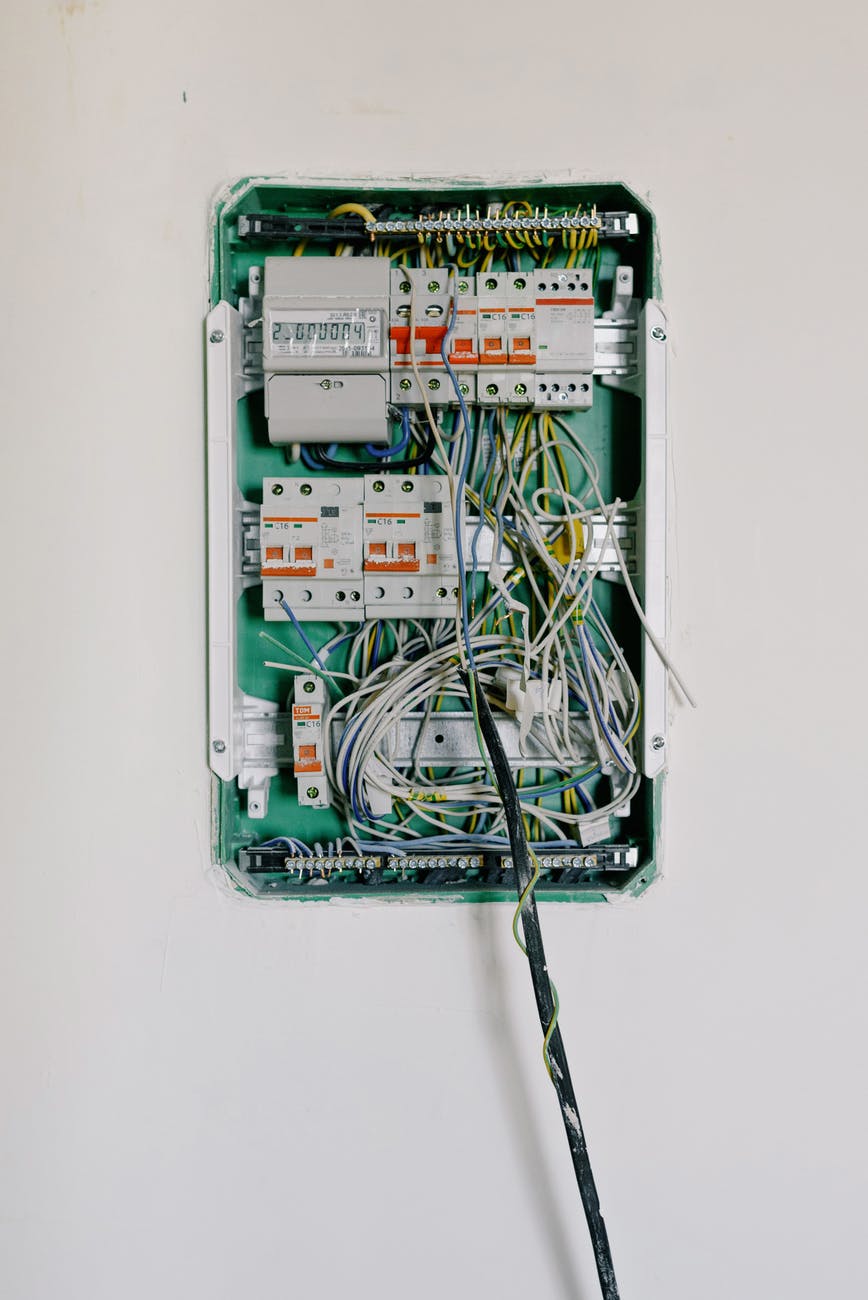
Note: The problem is much easier when one is familiar with what a series vs. parallel circuit looks like. Fortunately, plenty of examples can be found on the internet. Q: Two resistors are submitted to a 12 V potential. When linked together, the current is of 1.33 A. When in parallel, the current is 5.4Continue reading “ELECTRICITY: Series and Parallel Electrical Circuits”
MATHEMATICS: Binary Math and Computer Architecture ( Digital Electronics )

Note: The voltage values need to be worked out, and the simple device here may not represent what’s in real computers, but on a simple level, it comes close. The link beneath this paragraph will take you to a diagram of a NOT Gate. When there’s no voltage ( or current ) applied to theContinue reading “MATHEMATICS: Binary Math and Computer Architecture ( Digital Electronics )”
MATHEMATICS: A Review of Percent-to-Decimal Conversions

Q: The changes in the price of a stock from one year to the next year for three consecutive years were a 20% increase, a 25% decrease, and a 60% increase. What amount was the increase in the price of the stock over the three years? (Calculator allowed) A. 38%B. 44%C. 47%D. 55% You canContinue reading “MATHEMATICS: A Review of Percent-to-Decimal Conversions”
SOUND: What is the Sound-Intensity and Perceived Increase in Loudness at 1/4th the Distance?

Mr. Titus Tulay recently purchased a home four blocks from a busy tollway. On a typical evening, the decibel level resulting from tollway traffic is 62 dB at the location of his house. Determine the decibel level of a house 1 block from the tollway (four times closer). Essentially, a decibel reading tells us howContinue reading “SOUND: What is the Sound-Intensity and Perceived Increase in Loudness at 1/4th the Distance?”
SOUND: Calculating the Speed of an Approaching Target

In a previous entry, the velocity of a sound-emitting source ( vs ) and a moving receptor of sound ( vr ) were related to the frequency of the sound emitted by the source ( fs ) and the frequency at which the receptor interpreted the emitted sound ( fr ) as follows: ( frContinue reading “SOUND: Calculating the Speed of an Approaching Target”
CHEMISTRY: Percentages and Solution Preparation Techniques

Review of Solution Preparation Techniques in Chemistry. You want to mix a 30% alcohol solution with a 70% alcohol solution to make 400mL of 60% alcohol solution. How much 70% solution should you use? METHOD 1 : 70% of some quantity ( Solution x ) out of one container + 30% of some quantity (Continue reading “CHEMISTRY: Percentages and Solution Preparation Techniques”
CHEMISTRY: Understanding The pH Scale

In order to truly understand what a ” pH ” means, one must first understand how exponents are used in mathematics. Afterward, the usefulness of logarithms, which are the opposite operation of exponents, will be greatly appreciated. Ten times one can be written as 10 X 1. Likewise, it may be written as 10*1. MostContinue reading “CHEMISTRY: Understanding The pH Scale”
SOUND: Intensity, Loudness, and the Decibel System

The intensity ( I ) of a sound is quantitatively different than how sound is perceived by the ear. The perception of sound is referred to as ” loudness “. When a sound’s intensity increases by 10 decibels ( B ), the ear perceives this increase as a ” doubling ” in loudness. Logarithmic mathematicsContinue reading “SOUND: Intensity, Loudness, and the Decibel System”
SOUND: The Doppler Effect

Sound is a quantification of the rate at which pressure waves pass through a “ springy “ gas medium such as air. A complete wave cycle is inclusive of regions of high and low pressure created by a vibrating source of sound. If we consider a circumstance in which a stationary source of sound isContinue reading “SOUND: The Doppler Effect”
 RENAISSANCE PHYSICS