
Several mistakes are commonly made by new cryptocurrency investors. For starters, it is wise to make a definitive choice between investing vs. active trading. Taxes, transaction fees ( and losses ) quickly add for active cryptocurrency traders. Additionally, the sale of any cryptocurrency that occurs when a coin has been held less than 1 yearContinue reading “BUYING AND ” HODLING ” CRYPTOCURRENCY: 101″
Author Archives: George Walker
MARKET ORDERS, LIMIT ORDERS, and STOP-LOSS ORDERS: What are the differences?

Investors most commonly use market orders to buy or sell shares of a company’s stock. A market order allows a desired stock trade to be executed immediately if a buyer or seller becomes available. This happens very quickly during trading hours if large numbers of investors continuously buy and/or sell a stock during market hours.Continue reading “MARKET ORDERS, LIMIT ORDERS, and STOP-LOSS ORDERS: What are the differences?”
FINDING THE LOWEST COMMON DENOMINATOR ( LCD ) OF FRACTIONS AND DETERMINING THE TOTAL RESISTANCE ( Rt ) OF PARALLEL ELECTRICAL CIRCUITS:
FINDING THE LOWEST COMMON DENOMINATOR: Let’s first envision putting two half pieces of a pie together to get a full pie. Numerically, this would involve adding ( 1/2 ) + ( 1/2 ) = ( [ 1 + 1 ] / 2 ) = ( 2/2 ) = 1 whole pie. This example was madeContinue reading “FINDING THE LOWEST COMMON DENOMINATOR ( LCD ) OF FRACTIONS AND DETERMINING THE TOTAL RESISTANCE ( Rt ) OF PARALLEL ELECTRICAL CIRCUITS:”
MATHEMATICS: A Review of Logarithmic Functions and Exponential Math

The basic rules of exponents state that some number ( a ) raised to the ( x ) power is equal to ( y ). For example, ( 2 )( 2 ) = 4. This can also be expressed as ” two squared ” = 2^2. Likewise, ( 2 )( 2 )( 2 ) =Continue reading “MATHEMATICS: A Review of Logarithmic Functions and Exponential Math”
ELECTRICITY: Series and Parallel Electrical Circuits
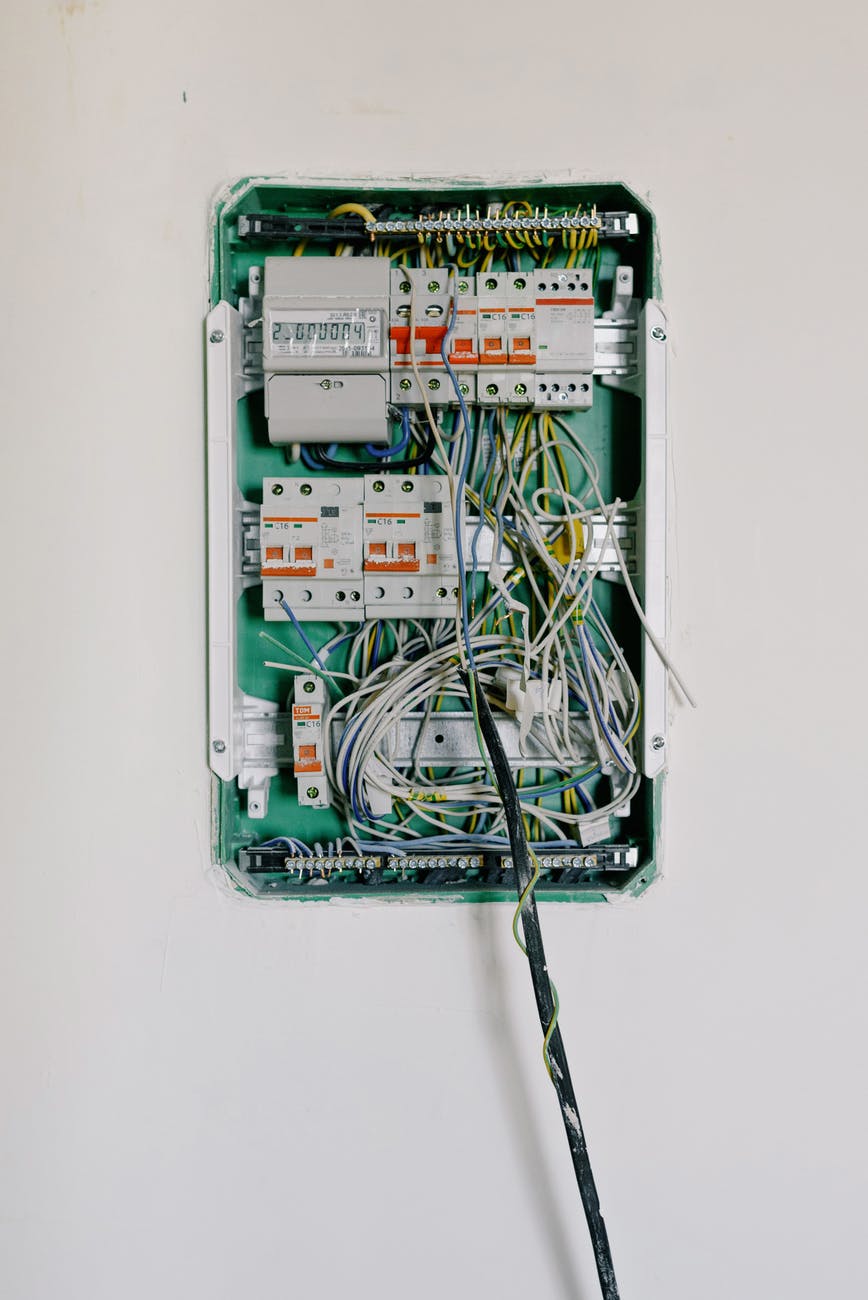
Note: The problem is much easier when one is familiar with what a series vs. parallel circuit looks like. Fortunately, plenty of examples can be found on the internet. Q: Two resistors are submitted to a 12 V potential. When linked together, the current is of 1.33 A. When in parallel, the current is 5.4Continue reading “ELECTRICITY: Series and Parallel Electrical Circuits”
MATHEMATICS: Binary Math and Computer Architecture ( Digital Electronics )

Note: The voltage values need to be worked out, and the simple device here may not represent what’s in real computers, but on a simple level, it comes close. The link beneath this paragraph will take you to a diagram of a NOT Gate. When there’s no voltage ( or current ) applied to theContinue reading “MATHEMATICS: Binary Math and Computer Architecture ( Digital Electronics )”
MATHEMATICS: A Review of Percent-to-Decimal Conversions

Q: The changes in the price of a stock from one year to the next year for three consecutive years were a 20% increase, a 25% decrease, and a 60% increase. What amount was the increase in the price of the stock over the three years? (Calculator allowed) A. 38%B. 44%C. 47%D. 55% You canContinue reading “MATHEMATICS: A Review of Percent-to-Decimal Conversions”
SOUND: What is the Sound-Intensity and Perceived Increase in Loudness at 1/4th the Distance?

Mr. Titus Tulay recently purchased a home four blocks from a busy tollway. On a typical evening, the decibel level resulting from tollway traffic is 62 dB at the location of his house. Determine the decibel level of a house 1 block from the tollway (four times closer). Essentially, a decibel reading tells us howContinue reading “SOUND: What is the Sound-Intensity and Perceived Increase in Loudness at 1/4th the Distance?”
SOUND: Calculating the Speed of an Approaching Target

In a previous entry, the velocity of a sound-emitting source ( vs ) and a moving receptor of sound ( vr ) were related to the frequency of the sound emitted by the source ( fs ) and the frequency at which the receptor interpreted the emitted sound ( fr ) as follows: ( frContinue reading “SOUND: Calculating the Speed of an Approaching Target”
CHEMISTRY: Percentages and Solution Preparation Techniques

Review of Solution Preparation Techniques in Chemistry. You want to mix a 30% alcohol solution with a 70% alcohol solution to make 400mL of 60% alcohol solution. How much 70% solution should you use? METHOD 1 : 70% of some quantity ( Solution x ) out of one container + 30% of some quantity (Continue reading “CHEMISTRY: Percentages and Solution Preparation Techniques”

