
When the topic of options trading arises among most people, the topic discussed regards buying options in anticipation of a stock price moving in a predicted direction. If an options trader thinks the price of a stock will rise, s/he might purchase a ” call option “. A call option gives its owner the rightContinue reading “THE STOCK MARKET: Selling Covered Call Options.”
Author Archives: George Tafari
CHEMISTRY: What Quantity Does a Mole Describe?

CHEMISTRY 101: WHAT IS A ” MOLE “? HOW DOES THE QUANTITY DESCRIBED AS BEING A ” MOLAR ” QUANTITY CONNECT THE INVISIBLE SUBATOMIC WORLD TO THE VISIBLE WORLD? A balanced chemical equation is representative of a chemical reaction ( RXN ). For example, water is known to be made of two hydrogen ions +Continue reading “CHEMISTRY: What Quantity Does a Mole Describe?”
MATHEMATICS: Is The Earth Really Round?

Disclaimer: The earth, according to current mathematical models and observations, is not flat. ROUND-EARTH MATHEMATICS : In determining the rotational speed of the earth, we must first assume that the sun is positioned an exceptionally far distance from the earth. If this were not the case, snow, water, and complex biological life would be non-existent.Continue reading “MATHEMATICS: Is The Earth Really Round?”
ENERGY AND MOMENTUM: Artificial Gravity in a Spinning Spacecraft.

Q: A team of engineers is building a spaceship to go to Jupiter. Their design includes a gravity ring, a spinning section where (in the ring’s reference frame) astronauts are pushed outwards by the centrifugal force. In their current design, the ring has to spin once every ten seconds in order to provide the sameContinue reading “ENERGY AND MOMENTUM: Artificial Gravity in a Spinning Spacecraft.”
HEAT AND THERMAL ENERGY: Fahrenheit, Celsius, and Kelvin Scales
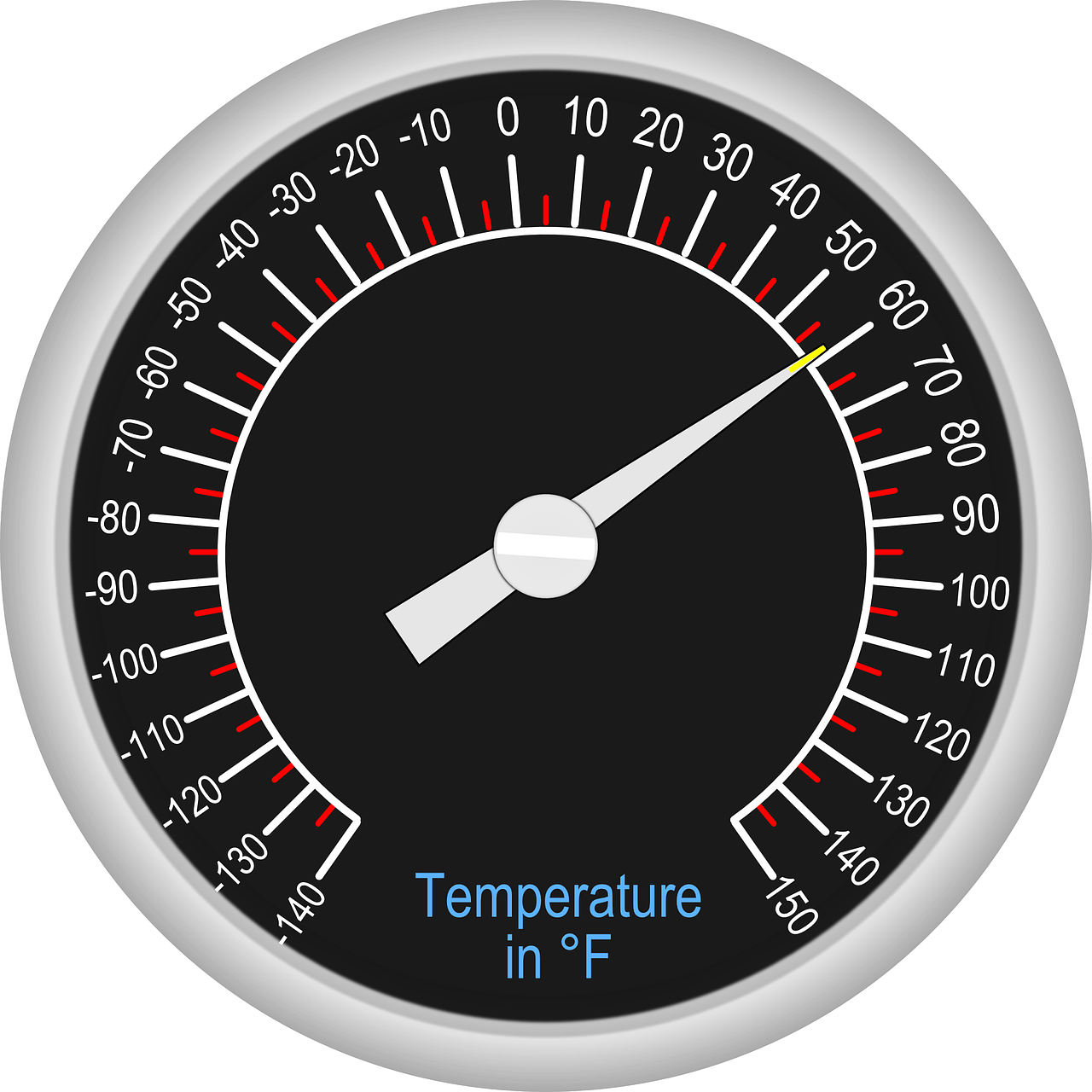
What relationship exists ( if any ) between heat and temperature? The concepts of heat and temperature are akin to the relationship between the number of moles of a substance and the molarity ( M = moles / L ) of an associated solution. Recall that a mole is a quantity of substance ( atomsContinue reading “HEAT AND THERMAL ENERGY: Fahrenheit, Celsius, and Kelvin Scales”
ENERGY AND MOMENTUM: ( x ) and ( y ) Vector Components of Motion.

Q: A steel ball of mass 10 kg moves due East at 5.0 m/s. It collides with a rubber ball of mass 5.0 kg moving at 10 m/s due North. After the collision the steel ball moves at an angle of 60° East of North with a speed of 4.0 m/s. What is the velocityContinue reading “ENERGY AND MOMENTUM: ( x ) and ( y ) Vector Components of Motion.”
HEAT AND THERMAL ENERGY: Thermal Expansion of Solids and Liquids.
The subatomic structure of solids and liquids have a profound influence upon how they react to a transfer of thermal energy. Solids have a relatively fixed or rigid structure, whereas the molecular structure of liquids allows for greater expansion and compression. Measurements have shown that ( in general ) a linear relationship exists between theContinue reading “HEAT AND THERMAL ENERGY: Thermal Expansion of Solids and Liquids.”
THE STOCK MARKET: The Future of 3-D Printing and Gene Therapy.

With the exception of artificial influences, the cost of goods and services are determined by supply and demand. Demand is sometimes categorized as either ” elastic ” or ” inelastic “. A good or service that has inelastic demand satisfies the basic tenets of Abraham Maslow’s hierarchy of needs . The evolution of artificially intelligent machines hasContinue reading “THE STOCK MARKET: The Future of 3-D Printing and Gene Therapy.”
GAS LAWS: Boyle’s Law, Charle’s Law, and Gay-Lussac’s Law.

GAS LAWS: Boyle’s Law, Charles’s Law, and Gay-Lussac’s Law The most easily observable macroscopic traits of a gas are its pressure ( P ), volume ( V ), mass ( m ), and temperature ( T ). Pressure is measured in Pascals ( or psi ) and has units of force ( N ) perContinue reading “GAS LAWS: Boyle’s Law, Charle’s Law, and Gay-Lussac’s Law.”
 RENAISSANCE PHYSICS