
When a Bronsted Lowery acid loses a proton ( +H ion ), an electron ( e- ) pair and NET negative charge remain on the proton donor. For example, hydrochloric acid ( HCl ) readily forms +H and -Cl ions when placed within an aqueous solution. Lewis acids, however, expand upon this concept to includeContinue reading “CHEMISTRY: Bronsted Lowery vs. Lewis Acids”
Category Archives: Chemistry
SOLIDS: The Size of Atoms

Prior to advances in x-ray scattering technology, creativity and mathematics were the tools used to estimate the size of atoms. As it turns out, the accuracy of such estimates was best when information about solids was used in calculations. Since solids and liquids can only be compressed to a negligible extent, we are at libertyContinue reading “SOLIDS: The Size of Atoms”
SOLIDS: Determining the Mass of a Golden Sphere

Q: Gold has an atomic mass of 197 amu. If a golden sphere has a diameter of 0.10 m, how many atoms does it contain? A: In order to determine what volume ( V ) is occupied by the sphere, we must obtain a value for the sphere’s radius ( r ). Fortunately, the radiusContinue reading “SOLIDS: Determining the Mass of a Golden Sphere”
SOLIDS: The mole and Avogadro’s Number
Imagine a world where dollars can be seen with the naked eye, but pennies, nickels, dimes, and quarters are invisible. In this world, you are assigned the task of giving a presentation where, somehow or another, dollars replace pennies as the smallest unit of currency. The relationships between the aforementioned currencies will take on theContinue reading “SOLIDS: The mole and Avogadro’s Number”
CHEMISTRY: A Review of Molarity ( M ), Balanced Chemical Reactions, Limiting Reagents, and Quantitative Analysis
Balanced chemical reactions ( RXN ) represent reactions in which perfect ratios of reactants and products react. Let’s consider a photosynthetic RXN where glucose reacts with molecular oxygen to form carbon dioxide, water, and energy: C6H12O6 + 6O2 → 6CO2 + 6H2O + energy In the subatomic world, a single molecule of glucose reacts withContinue reading “CHEMISTRY: A Review of Molarity ( M ), Balanced Chemical Reactions, Limiting Reagents, and Quantitative Analysis”
STOICHIOMETRY: Balancing Chemical Reactions

Stoichiometry is founded upon the law of the conservation of mass. A chemical reaction’s ( RXN ) reactants and products must be balanced in such a way that a rearrangement of atoms ( or molecules ) occurs, but the total mass of atoms involved in the RXN is conserved. Let’s begin with an examination ofContinue reading “STOICHIOMETRY: Balancing Chemical Reactions”
THE BASIC STRUCTURE and FUNCTION of DNA and RNA:

DNA vs. RNA STRUCTURE Deoxyribonucleic acid ( DNA ) and Ribonucleic acid ( RNA ) enable the cells of living organisms to manufacture proteins. Proteins can exist as singular or multi-strand molecular units with very complex functions; they can be used to form structural cell wall components, neurotransmitters, enzymes, and other structures necessary for anContinue reading “THE BASIC STRUCTURE and FUNCTION of DNA and RNA:”
CHEMISTRY: Percentages and Solution Preparation Techniques

Review of Solution Preparation Techniques in Chemistry. You want to mix a 30% alcohol solution with a 70% alcohol solution to make 400mL of 60% alcohol solution. How much 70% solution should you use? METHOD 1 : 70% of some quantity ( Solution x ) out of one container + 30% of some quantity (Continue reading “CHEMISTRY: Percentages and Solution Preparation Techniques”
CHEMISTRY: Understanding The pH Scale

In order to truly understand what a ” pH ” means, one must first understand how exponents are used in mathematics. Afterward, the usefulness of logarithms, which are the opposite operation of exponents, will be greatly appreciated. Ten times one can be written as 10 X 1. Likewise, it may be written as 10*1. MostContinue reading “CHEMISTRY: Understanding The pH Scale”
MATHEMATICS: An Introduction To Chemistry and Physics
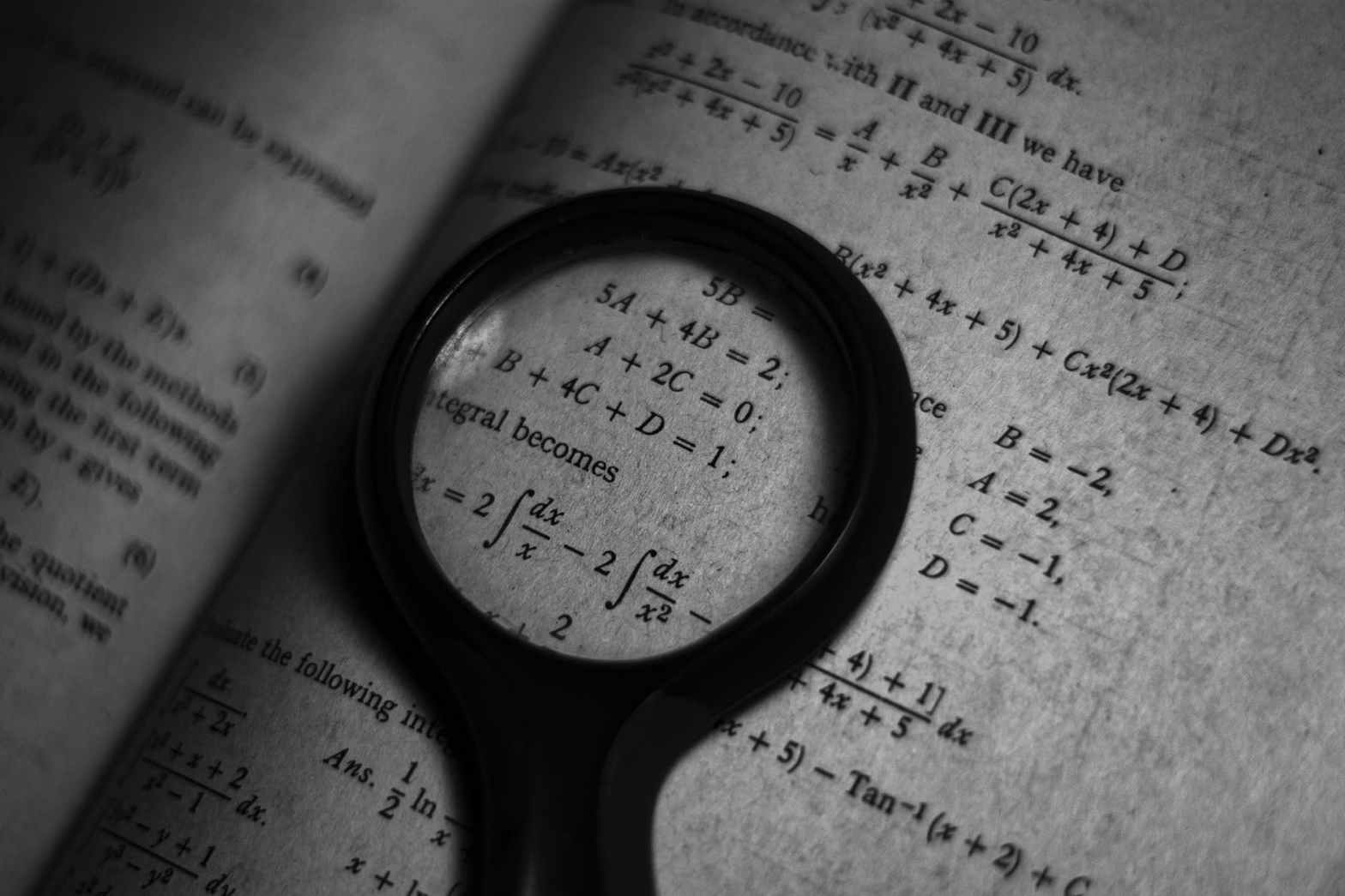
( 1 ) One times one equals one. ( 2 ) One divided by one equals one. These two concepts can get anyone off the ground and on their way to mastering intro. chemistry and/or physics. The following numbers are equivalent to the number 1 : ( 2 divided by 2 = 1 ), (Continue reading “MATHEMATICS: An Introduction To Chemistry and Physics”
 RENAISSANCE PHYSICS