
An introductory discussion of electronics would be remiss without a conceptual analysis of DC voltage ( Vdc ), current ( I ), and resistance ( R ). Most students readily adapt to teaching strategies that relate new topics to familiar themes and everyday life experiences. Visual aids are of preeminent importance to new and seasonedContinue reading “INTRODUCTION TO ELECTRONICS: Direct Current ( DC ) Voltage, Current, and Resistance”
Category Archives: Mathematics
AP PHYSICS: Graph-Slope Interpretation

Consider the following graph: If we allow the ( y1 ) and ( x1 ) coordinates of the slope formula to be zero, a predictable slope begins to emerge as we move to the right. A steeper slope would necessitate a greater change in y-values relative to corresponding changes in x-values. Likewise, a less steepContinue reading “AP PHYSICS: Graph-Slope Interpretation”
AP PHYSICS: Conversion Fractions

If we multiply the number 1 by a unit A, we end up with one unit of A: 1 x A = A We are at liberty to substitute A with any quantity we wish: 1 x 5kg = 5kg 1 x 6s = 6s 1 x 100m = 100m Furthermore, 1 x A =Continue reading “AP PHYSICS: Conversion Fractions”
AP PHYSICS: Scientific Notation
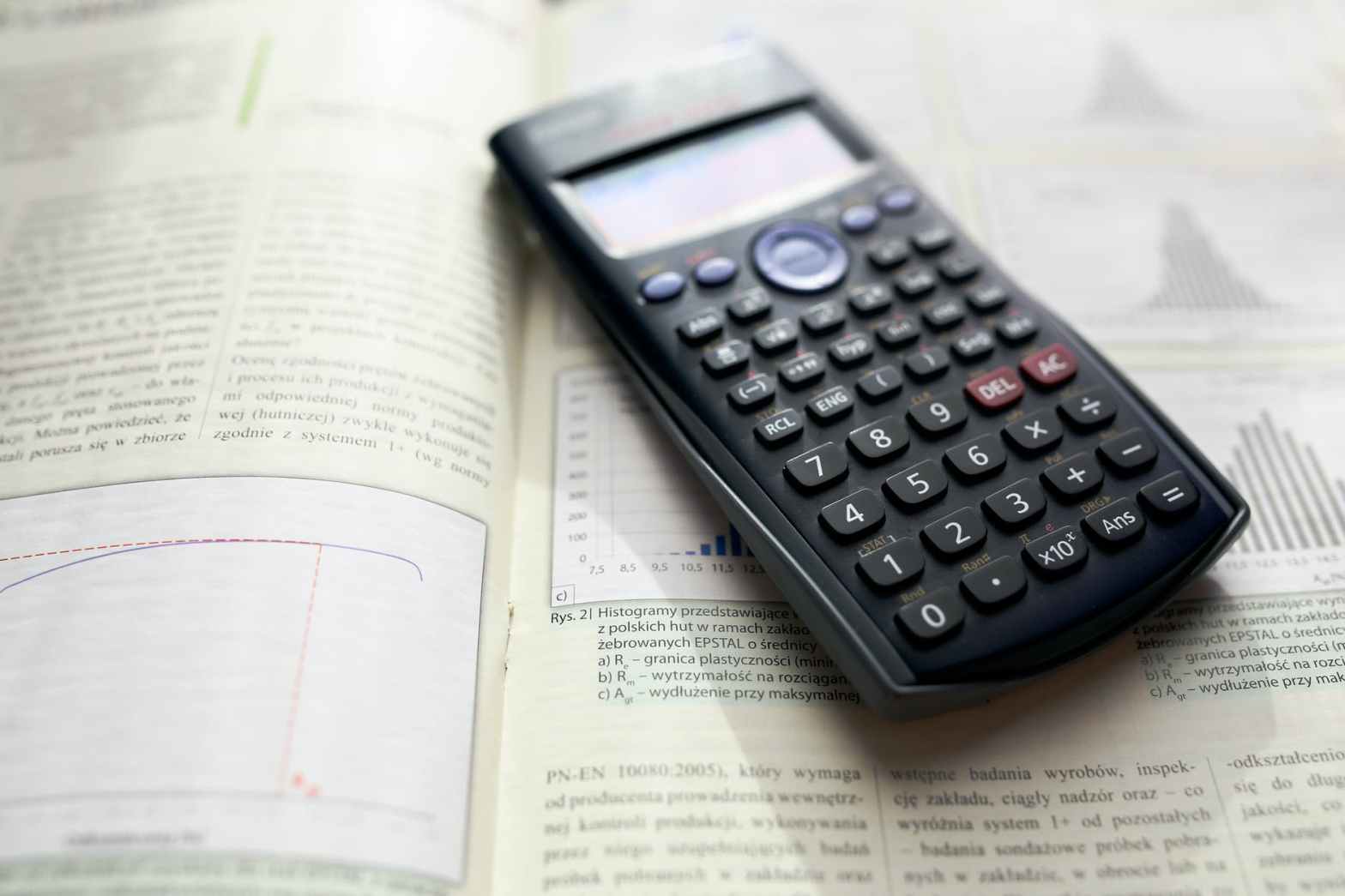
It would be extremely inconvenient, inefficient, cumbersome, and annoying ( if even possible ) to make measurements of submicroscopic life forms and cross-continental terrain with the same instruments. Scientific notation provides us with a condensed method of expressing both large and small quantities alike. In addition to convenience and practicality, scientific notation reduces the chancesContinue reading “AP PHYSICS: Scientific Notation”
AP PHYSICS: Significant Figures

Significant digits address the issue of uncertainty in measurements. When carrying out mathematical exercises, the term with the least number of significant digits will determine how many “ sig figs “ the answer must contain. A quick summary of the rules regarding significant figures follows: All non-zero digits are significant. All digits between non-zero digitsContinue reading “AP PHYSICS: Significant Figures”
MATHEMATICS: A Review of Binary Mathematics and the Hexadecimal Counting System:

Write the numbers 8, 4, 2, and 1 in descending order. Binary numbers are formed by choosing numbers from this sequence and adding them together to form a number that is desired. The number 1 is used to choose numbers out of the ( 8, 4, 2, 1 ) sequence that are needed, and aContinue reading “MATHEMATICS: A Review of Binary Mathematics and the Hexadecimal Counting System:”
ELECTRONICS: Kirchhoff’s Laws

Q: What are the values of the currents ( I ) and unknown voltage drops ( V ) across the resistors ( R ) pictured below? A: The first problem-solving step involves assigning labels to the junctions ( j ) in the circuit: We must now sketch the currents flowing in the circuit: The currentContinue reading “ELECTRONICS: Kirchhoff’s Laws”
ELECTRICITY: Wattage

Q: A parallel electrical circuit connects the electrical outlets located within a room. A 20-A fuse is put into place to protect the circuit from unexpected surges of current ( I ). The voltage drop across each circuit element is V = 120 V. What is the maximum power ( W ) output that canContinue reading “ELECTRICITY: Wattage”
FINDING THE LOWEST COMMON DENOMINATOR ( LCD ) OF FRACTIONS AND DETERMINING THE TOTAL RESISTANCE ( Rt ) OF PARALLEL ELECTRICAL CIRCUITS:
FINDING THE LOWEST COMMON DENOMINATOR: Let’s first envision putting two half pieces of a pie together to get a full pie. Numerically, this would involve adding ( 1/2 ) + ( 1/2 ) = ( [ 1 + 1 ] / 2 ) = ( 2/2 ) = 1 whole pie. This example was madeContinue reading “FINDING THE LOWEST COMMON DENOMINATOR ( LCD ) OF FRACTIONS AND DETERMINING THE TOTAL RESISTANCE ( Rt ) OF PARALLEL ELECTRICAL CIRCUITS:”
MATHEMATICS: A Review of Logarithmic Functions and Exponential Math

The basic rules of exponents state that some number ( a ) raised to the ( x ) power is equal to ( y ). For example, ( 2 )( 2 ) = 4. This can also be expressed as ” two squared ” = 2^2. Likewise, ( 2 )( 2 )( 2 ) =Continue reading “MATHEMATICS: A Review of Logarithmic Functions and Exponential Math”

