
The process of accurately determining the specific heat capacity ( c ) of a substance is dependent upon minimal heat ( Q ) losses occurring within a system’s frame of reference. A calorimeter is designed so that such losses are negligible to the extent that they can be ignored. Consider the diagram below: A thinContinue reading “HEAT AND THERMAL ENERGY: The Calorimeter”
Tag Archives: Celsius
GAS LAWS: Boltzmann’s Constant

In previous circumstances, a known quantity of an ideal gas in moles ( n ) was shown to influence a volume of space in accordance with the Ideal Gas Law ( PV = nRT ). It is useful, however, to be able to determine the number of molecules ( N ) of a gas thatContinue reading “GAS LAWS: Boltzmann’s Constant”
HEAT AND THERMAL ENERGY: Fahrenheit, Celsius, and Kelvin Scales
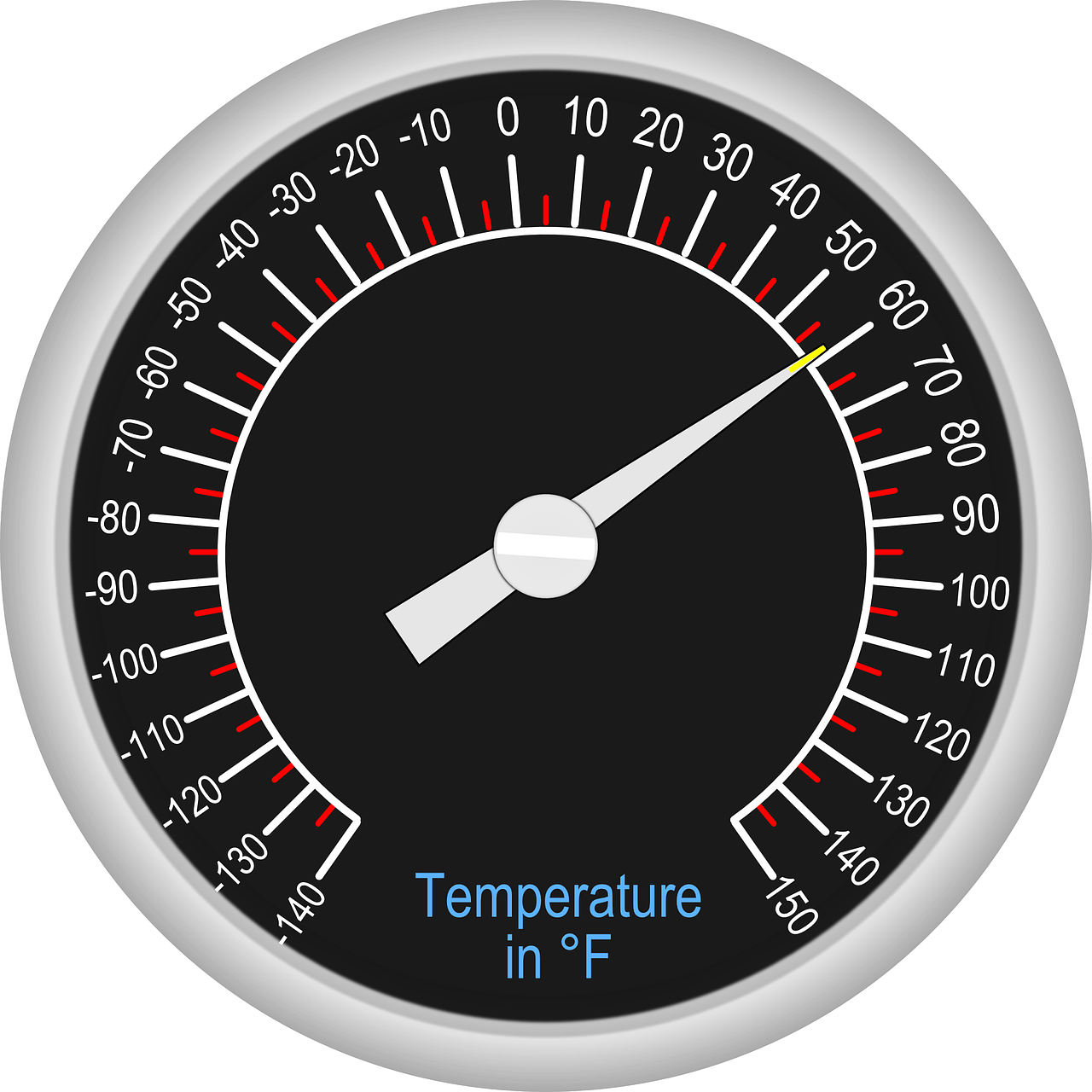
What relationship exists ( if any ) between heat and temperature? The concepts of heat and temperature are akin to the relationship between the number of moles of a substance and the molarity ( M = moles / L ) of an associated solution. Recall that a mole is a quantity of substance ( atomsContinue reading “HEAT AND THERMAL ENERGY: Fahrenheit, Celsius, and Kelvin Scales”
HEAT AND THERMAL ENERGY: Thermal Expansion of Solids and Liquids.

The subatomic structure of solids and liquids have a profound influence upon how they react to a transfer of thermal energy. Solids have a relatively fixed or rigid structure, whereas the molecular structure of liquids allows for greater expansion and compression. Measurements have shown that ( in general ) a linear relationship exists between theContinue reading “HEAT AND THERMAL ENERGY: Thermal Expansion of Solids and Liquids.”
 RENAISSANCE PHYSICS