
Q: A charged species traveling at a constant velocity ( v ) through a magnetic field ( B ) will experience a force if the direction of motion is at a 900 angle with the B-field. How can trigonometry be used to quantify this phenomena? A: The magnetic force ( Fm ) on the chargedContinue reading “AP PHYSICS: Trigonometry and Vector Components”
Tag Archives: constant velocity
ENERGY AND MOMENTUM: Elastic Collisions and the Center of Mass Velocity ( Part 2 )

In Part 1 of this entry, it was determined that the center of mass between objects moving with constant velocities is also constant ( vcm ): We will now use mass ( kg ) and instantaneous-distance coordinates along ( x ) to determine the system’s center of mass. Let’s begin using the x-coordinates of (Continue reading “ENERGY AND MOMENTUM: Elastic Collisions and the Center of Mass Velocity ( Part 2 )”
ENERGY AND MOMENTUM: Elastic Collisions and the Center of Mass Velocity ( Part 1 )

A system’s center of mass is the location where the average mass distribution of the system is located. Consider a system in which two equal masses rest at the ends of a balance: The sum of torques acting upon the system is zero, and it will remain in static equilibrium until acted upon by anContinue reading “ENERGY AND MOMENTUM: Elastic Collisions and the Center of Mass Velocity ( Part 1 ) “
ENERGY AND MOMENTUM: Final Velocity of Target and Projection After Elastic Collision ( Part 1 )

Q: Within a given system, a projectile moves with a constant velocity ( v1 ) prior to colliding with a stationary target of equal mass ( m1 = m2 ). Since the system is isolated from outside forces, momentum ( p ) and kinetic energy ( KE ) both are conserved during the collision. (Continue reading “ENERGY AND MOMENTUM: Final Velocity of Target and Projection After Elastic Collision ( Part 1 )”
ENERGY AND MOMENTUM: A Windy Day at the Lake
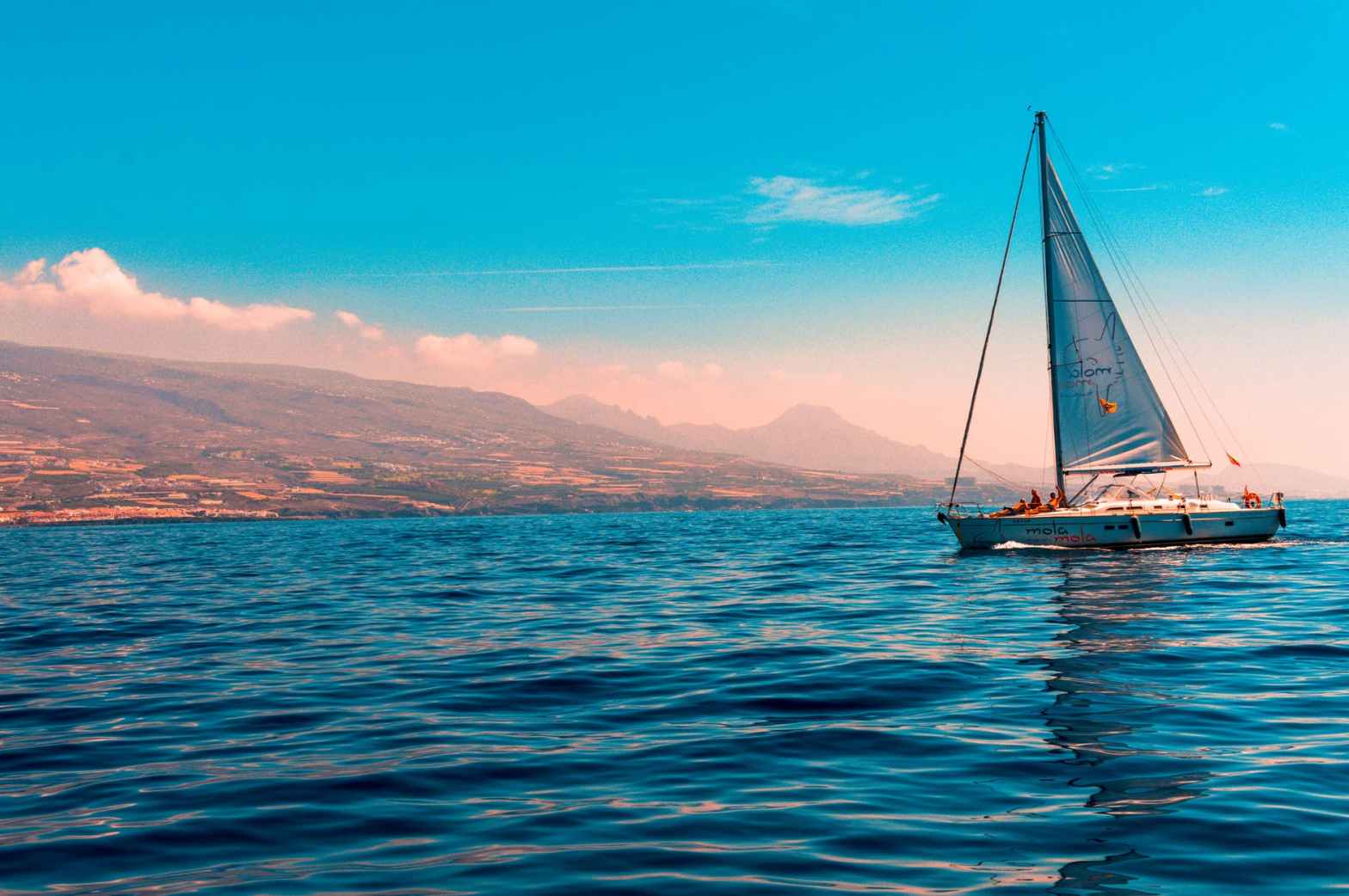
Q: Wind blows a 43.0 kg raft across a lake at 1.1 m/s northward relative to the water underneath. It carries a passenger whose mass is 38.0 kg. The passenger begins to walk westward at 0.71 m/s. What is the final velocity of the raft relative to the water? A: We first determine the momentumContinue reading “ENERGY AND MOMENTUM: A Windy Day at the Lake”
 RENAISSANCE PHYSICS