
Power is the rate at which energy is deposited within ( or liberated from ) some medium. As pertains to electronics, the watt is a measure of how many joules ( J ) of energy are deposited per second within the resistive elements of a circuit. The SI unit of power is the watt (Continue reading “INTRODUCTION TO ELECTRONICS: Power in Parallel Circuits“
Tag Archives: joule ( J )
INTRODUCTION TO ELECTRONICS: Power in Series Circuits

Thus far, we have seen how the net resistance ( R ) to current ( I ) flow within a series circuit is the sum of all the resistors that are present: Rt = R1 + R2 + R3 +…Rn The voltage ( V ) drop that occurs as a coulomb ( C ) ofContinue reading “INTRODUCTION TO ELECTRONICS: Power in Series Circuits“
INTRODUCTION TO ELECTRONICS: Kirchhoff’s Laws ( Part 5 )

We are now ready to complete the Part 3 exercise using Kirchhoff’s Node and Loop Rules: Due to the presence of nodes at points C and E, differing current ( I ) values will be used to evaluate the voltage ( V ) drops that occur around each loop. There are three unique circuit pathwaysContinue reading “INTRODUCTION TO ELECTRONICS: Kirchhoff’s Laws ( Part 5 )“
INTRODUCTION TO ELECTRONICS: Kirchhoff’s Laws ( Part 4 )

Prior to completion of the previous lecture’s circuit problem, some additional practice identifying nodes and branches within a multi-loop circuit will be helpful: We begin our journey at the 3 V source located at the far-left side of the diagram. As the current ( I ) moves upward and to the right, we encounter ourContinue reading “INTRODUCTION TO ELECTRONICS: Kirchhoff’s Laws ( Part 4 )“
INTRODUCTION TO ELECTRONICS: Kirchhoff’s Laws ( Part 3 )

Thus far, we have used a single-loop series circuit to demonstrate the principles of Kirchhoff’s Loop Rule. What if, however, a circuit has multiple loops through which current ( I ) travels? To further complicate things, what if each loop contains a voltage ( V ) source? How will it be possible to determine theContinue reading “INTRODUCTION TO ELECTRONICS: Kirchhoff’s Laws ( Part 3 )”
INTRODUCTION TO ELECTRONICS: Kirchhoff’s Laws ( Part 2 )

The Loop Rule states that the sum of voltage ( V ) rises and drops around a closed loop must equal zero. This observation is an extension of the Law of Conservation of Energy which states that energy is neither created or destroyed, but it has the ability to change form. Furthermore, the direction thatContinue reading “INTRODUCTION TO ELECTRONICS: Kirchhoff’s Laws ( Part 2 )”
INTRODUCTION TO ELECTRONICS: Kirchhoff’s Laws ( Part 1 )

Conventional current ( I ) within an electrical circuit travels from a positively charged anode to a negatively charged cathode terminal: In reality, electric field lines are what emerge from the positive terminal and terminate on the negative one; thus, negatively charged electrons actually flow in the opposite direction. Envisioning current as mobile positive chargesContinue reading “INTRODUCTION TO ELECTRONICS: Kirchhoff’s Laws ( Part 1 )”
INTRODUCTION TO ELECTRONICS: Resistors in Series Circuits

The voltage ( V ) or “ potential difference “ of a DC power source is the drop in energy ( J ) that a coulomb ( C ) of charge will experience by traveling through a resistance ( R ) found within a circuit. The current in question flows along a closed, non-diverging route:Continue reading “INTRODUCTION TO ELECTRONICS: Resistors in Series Circuits”
INTRODUCTION TO ELECTRONICS: Ohm’s Law

The graph of a straight line represents a proportional relationship between input variables and output values; with every increase ( or decrease ) in input values, a proportionate change in output can be expected. The graph of a straight line can be graphed via usage of the following formula: y = mx + b ForContinue reading “INTRODUCTION TO ELECTRONICS: Ohm’s Law”
INTRODUCTION TO ELECTRONICS: Electrical Quantities and their Corresponding SI Units
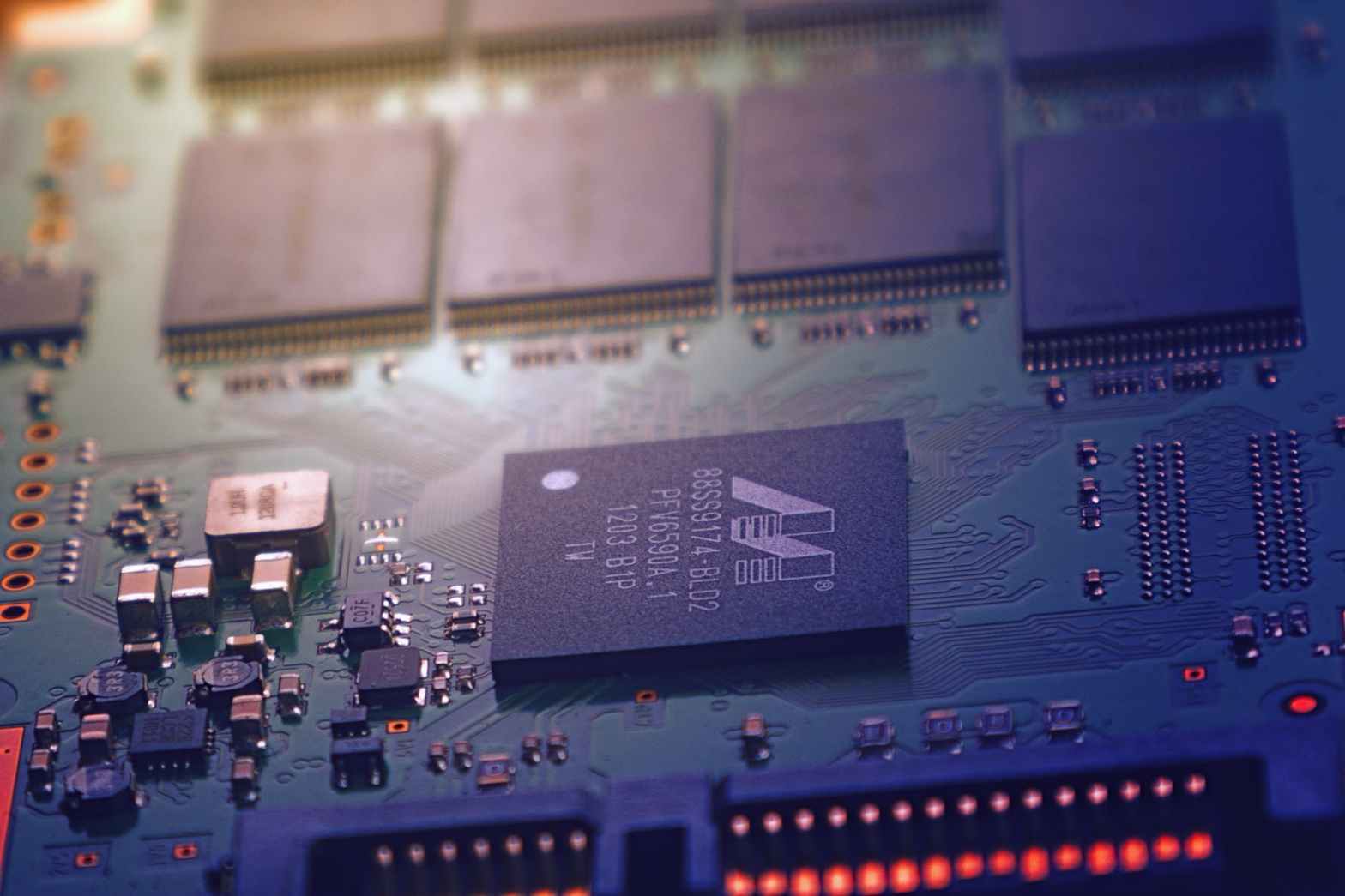
The International System ( SI ) has established internationally accepted values for physical quantities. These agreed-upon values constitute the building blocks of many scientific fields of study, including electronics. Each quantity in question is accompanied by a symbol, and each symbol can be substituted with an SI unit that gives it meaning. Consider the followingContinue reading “INTRODUCTION TO ELECTRONICS: Electrical Quantities and their Corresponding SI Units”
 RENAISSANCE PHYSICS