
Q: Wind blows a 43.0 kg raft across a lake at 1.1 m/s northward relative to the water underneath. It carries a passenger whose mass is 38.0 kg. The passenger begins to walk westward at 0.71 m/s. What is the final velocity of the raft relative to the water? A: We first determine the momentumContinue reading “ENERGY AND MOMENTUM: A Windy Day at the Lake”
Tag Archives: mass
ENERGY AND MOMENTUM: What is the final velocity of the hovering disk?

Q: A disk of mass 0.5 kg slides with a constant velocity of 2.4 m/s over an air table before colliding with an elastic band. If the band exerts an average force of 1.4 Newtons on the disk for 1.5 seconds, what is the final velocity of the disc? A1: The disc will experience aContinue reading “ENERGY AND MOMENTUM: What is the final velocity of the hovering disk?”
KINEMATICS: Where Will The Daredevil Land?
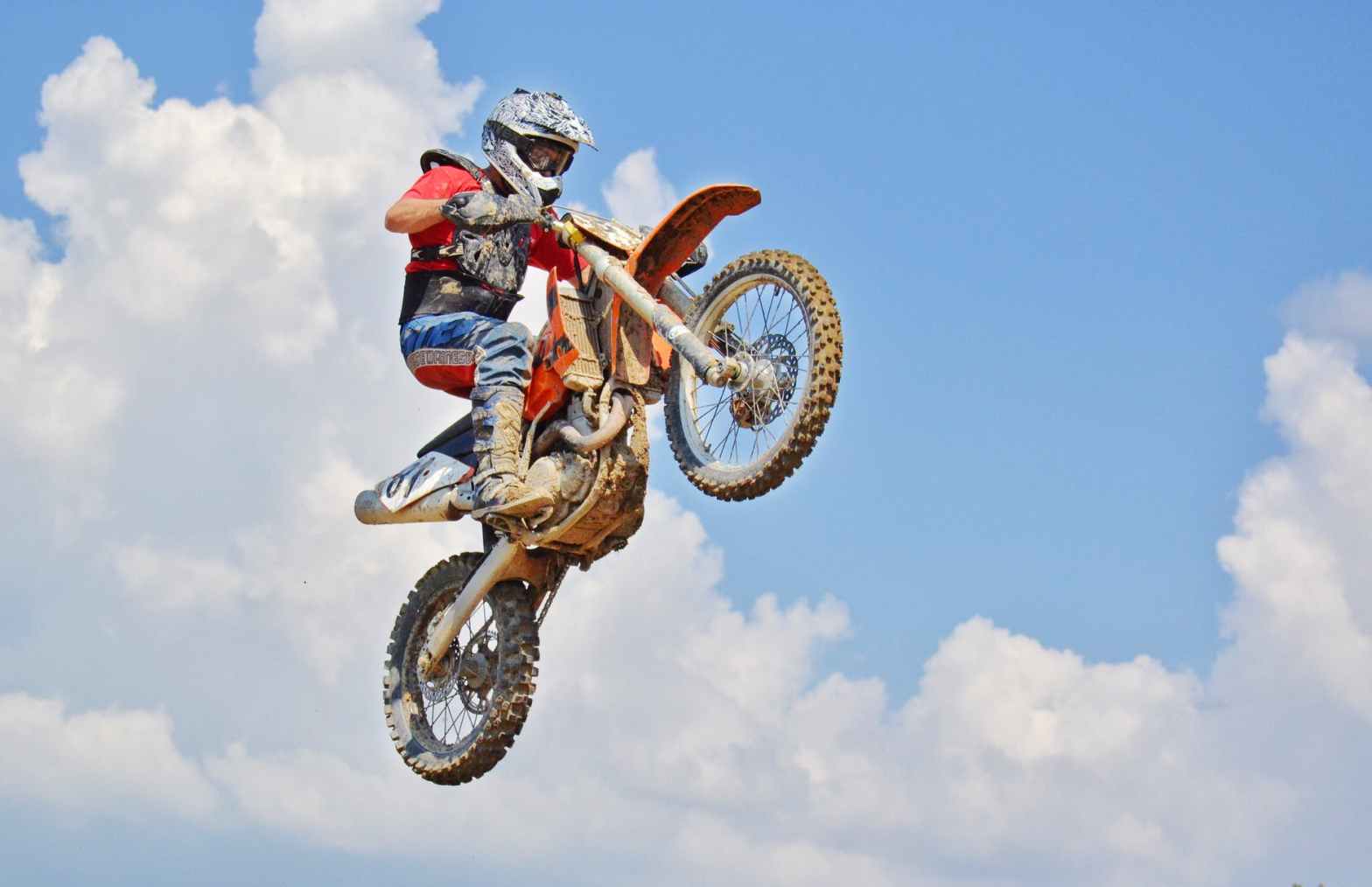
Q: A stuntman equipped with a parachute rides a bicycle over the edge of a 500.0-meter building. The combined mass of the stuntman and his bicycle is 90.0 kg. If the bike moves at 24.2 m/s as it leaves the building’s edge, at what distance from the building’s base must a cushion be placed inContinue reading “KINEMATICS: Where Will The Daredevil Land?”
FORCE AND ACCELERATION: What is the mass of the climbing acrobat?

Q: Two acrobats, a pulley, and a rope are used in a circus act. Acrobat 1 rapidly climbs one of the suspended lengths of rope at a distance of 16ft in 2 seconds with a constant acceleration. On the opposite length of rope, acrobat 2 is suspended in an attached chair that remains motionless aboveContinue reading “FORCE AND ACCELERATION: What is the mass of the climbing acrobat?”
FORCE AND ACCELERATION: Pulleys, Tension, Friction, and Free-Body Diagrams

Q: Three objects are connected by ropes that pass over massless and frictionless pulleys. As the objects move, the table exerts a force of friction on the middle object. The coefficient of kinetic friction is 0.100. What is the acceleration of the three objects within the system? What is the magnitude of the tension inContinue reading “FORCE AND ACCELERATION: Pulleys, Tension, Friction, and Free-Body Diagrams”
ENERGY and MOMENTUM: How Fast Will the Block Move When a Compressed Spring is Released?
Q: A spring with a spring constant k = 100 N/m is compressed a distance ( x ) = 100 mm. A block with a mass ( m ) = 0.250 kg is placed next to the spring. The surface upon which the block rests is frictionless and horizontal. When the spring and block areContinue reading “ENERGY and MOMENTUM: How Fast Will the Block Move When a Compressed Spring is Released?”
FORCE AND ACCELERATION: The Gravitational Force of Attraction

Q: An arbitrary distance separates two objects of equal mass. If the mass of each object is doubled, and the distance between the two objects is tripled, how will the force of attraction between the two objects change? A: This question regards the gravitational force of attraction that exists between two objects with well-defined massesContinue reading “FORCE AND ACCELERATION: The Gravitational Force of Attraction”
ENERGY and MOMENTUM: What is the Final Velocity of the Ball?

Q: A 10 kg iron ball moves in an Eastward direction at 5.0 m/s. It collides with a 5.0 kg rubber ball moving Northward at 10 m/s. After the collision, the iron ball moves 60° East of North with a speed of 4.0 m/s. What is the velocity of the rubber ball after the collision?Continue reading “ENERGY and MOMENTUM: What is the Final Velocity of the Ball?”
STOICHIOMETRY: Balancing Chemical Reactions

Stoichiometry is founded upon the law of the conservation of mass. A chemical reaction’s ( RXN ) reactants and products must be balanced in such a way that a rearrangement of atoms ( or molecules ) occurs, but the total mass of atoms involved in the RXN is conserved. Let’s begin with an examination ofContinue reading “STOICHIOMETRY: Balancing Chemical Reactions”
KINEMATICS: The ” architecture of motion. “

Q: A mass m is moving horizontally across the surface of the earth with a velocity of ( v ) = 30 m/s . The mass approaches a ledge with an edge situated 100 m above the ocean. The mass eventually moves off the ledge and falls until it reaches the ocean’s surface. Calculate theContinue reading “KINEMATICS: The ” architecture of motion. “”
 RENAISSANCE PHYSICS