
Thus far, we’ve seen how charge ( q ) in motion has the ability to give rise to magnetic fields ( B ) within certain material types. It will now be useful to see how certain rules are used to determine which direction this magnetic flux ( ɸ ) will travel within a given magneticContinue reading “INTRODUCTION TO ELECTRONICS: Electromagnet Fundamentals”
Tag Archives: positive charge
INTRODUCTION TO ELECTRONICS: Kirchhoff’s Laws ( Part 2 )

The Loop Rule states that the sum of voltage ( V ) rises and drops around a closed loop must equal zero. This observation is an extension of the Law of Conservation of Energy which states that energy is neither created or destroyed, but it has the ability to change form. Furthermore, the direction thatContinue reading “INTRODUCTION TO ELECTRONICS: Kirchhoff’s Laws ( Part 2 )”
INTRODUCTION TO ELECTRONICS: Series Circuits
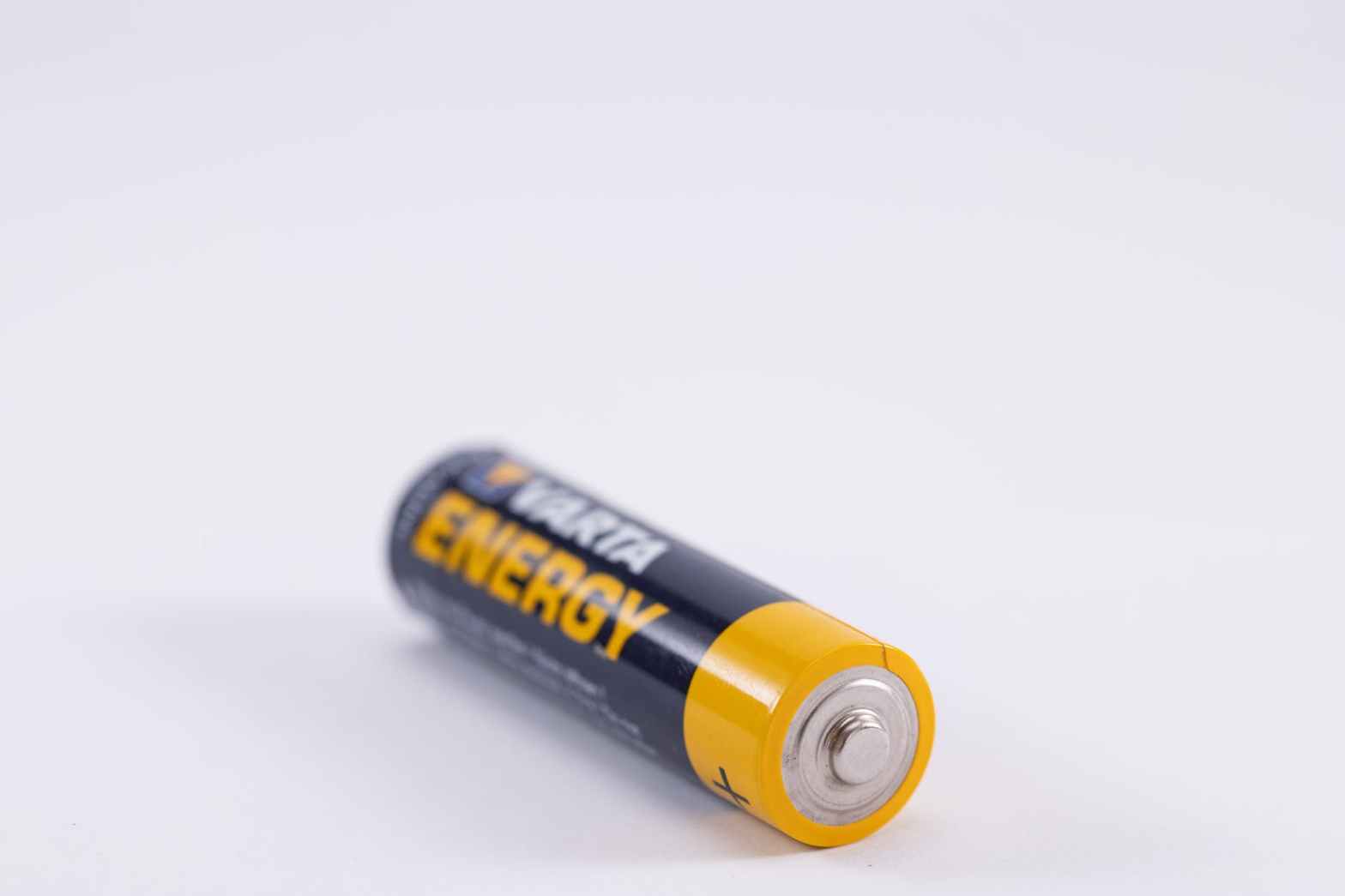
A series circuit is one in which electric current ( I ) travels along a closed path that does not split apart: *** Note: Conventional current consists of positive charges that flow from the positively charged anode to the negatively charged cathode. In reality, negatively charged electrons flow in the opposite direction. *** The diagram,Continue reading “INTRODUCTION TO ELECTRONICS: Series Circuits”
ELECTROSTATICS: A Charged Particle Suspended in Space

Q: A particle with a positive charge ( q1 = +45 nC ) maintains a fixed position beneath a second particle ( q2 ) with an unknown charge. The second particle ( q2 ) has a mass = 7.5 μg, and it is floating 25 cm above charge q1. The net force on q2 isContinue reading “ELECTROSTATICS: A Charged Particle Suspended in Space”
 RENAISSANCE PHYSICS