
Prior to advances in x-ray scattering technology, creativity and mathematics were the tools used to estimate the size of atoms. As it turns out, the accuracy of such estimates was best when information about solids was used in calculations. Since solids and liquids can only be compressed to a negligible extent, we are at libertyContinue reading “SOLIDS: The Size of Atoms”
Tag Archives: proton
ELECTROSTATICS: An Equilateral Triangle’s Center of Mass ( Part 1 )

The center of mass of a system is the location where the average mass of a system can be assumed to exist. If two equally massive children sit at opposite ends of a seesaw, their average mass will be located at the midpoint between them. When dealing with other systems of masses, determining the centerContinue reading “ELECTROSTATICS: An Equilateral Triangle’s Center of Mass ( Part 1 )”
ELECTRICITY: Wattage
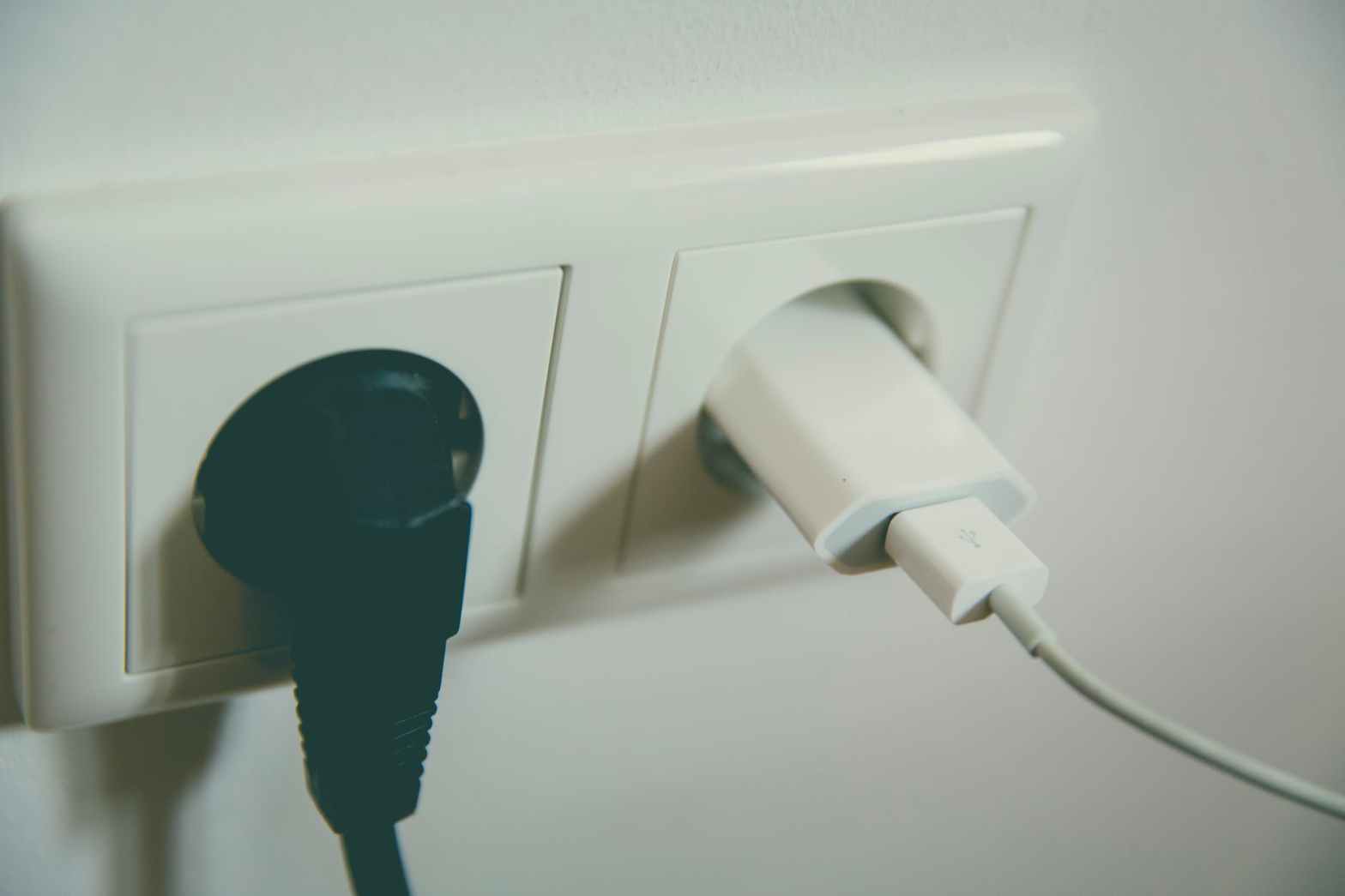
Q: A parallel electrical circuit connects the electrical outlets located within a room. A 20-A fuse is put into place to protect the circuit from unexpected surges of current ( I ). The voltage drop across each circuit element is V = 120 V. What is the maximum power ( W ) output that canContinue reading “ELECTRICITY: Wattage”
ELECTROSTATICS: A Charged Particle Suspended in Space

Q: A particle with a positive charge ( q1 = +45 nC ) maintains a fixed position beneath a second particle ( q2 ) with an unknown charge. The second particle ( q2 ) has a mass = 7.5 μg, and it is floating 25 cm above charge q1. The net force on q2 isContinue reading “ELECTROSTATICS: A Charged Particle Suspended in Space”
ENERGY AND MOMENTUM: Subatomic Collisions, Billiard Balls, and the 90-Degree Rule ( Part 1 )

An elastic collision, within which kinetic energy ( KE ) and momentum ( p ) are conserved, is mathematically modeled in terms of momentum as follows: pi = pf , and m1v1i + m2v2i = m1v1f + m2v2f where p = mv, and m = mass in kilograms ( kg ), and velocity ( vContinue reading “ENERGY AND MOMENTUM: Subatomic Collisions, Billiard Balls, and the 90-Degree Rule ( Part 1 )”
 RENAISSANCE PHYSICS