
An ideal gas is a gas that behaves as if the only significant interactions between its atoms occurs during elastic collisions. Under ideal conditions, intramolecular force interactions due to charged particles, as well as systemic losses due to entropy, are ignored. In addition to these subatomic interactions occurring within a specified quantity of space, thereContinue reading “GAS LAWS: Boltzmann Constant Derivation”
Tag Archives: Temperature
AP PHYSICS: Heat Transfer in a Calorimeter

Q: A kilogram ( kg ) of water with a temperature of 20o C is poured into a calorimeter. Subsequently, an unknown mass of stainless steel with a temperature of 80o C is placed in the water. What must the mass of the steel be in order for the temperature of the water to riseContinue reading “AP PHYSICS: Heat Transfer in a Calorimeter”
HEAT AND THERMAL ENERGY: Heat Energy Absorbed by a Pot of Water
Q: A 3 kg aluminum pot is filled to capacity with 5 kg of water. If the pot and water are both raised from 25o C to 95o C, what total quantity of heat has been absorbed by the system? A: Although the pot and water both rise and reach a common final temperature, theyContinue reading “HEAT AND THERMAL ENERGY: Heat Energy Absorbed by a Pot of Water”
HEAT AND THERMAL ENERGY: Specific Heat Capacity of an Unknown Metal

Q: A sample of an unknown metal is heated to a predetermined temperature. It is subsequently placed within a quantity of water that is room temperature. The temperature of the water is determined to have risen by a certain amount after being measured a second time around. Generally speaking, how may this information be usedContinue reading “HEAT AND THERMAL ENERGY: Specific Heat Capacity of an Unknown Metal”
INTRODUCTION TO ELECTRONICS: The Unbalanced Wheatstone Bridge and Sensor Technology

A transducer is an electronic device that measures physical parameters such as mechanical strain, pressure, optical density, and/or temperature. If temperature is being measured, an instrument called a thermistor acts as a variable resistor at the R1 location of a Wheatstone bridge. At a known neutral temperature, a zero reference voltage ( Vout ) valueContinue reading “INTRODUCTION TO ELECTRONICS: The Unbalanced Wheatstone Bridge and Sensor Technology“
INTRODUCTION TO ELECTRONICS: The Balanced Wheatstone Bridge

The voltage ( V ) drops across parallel-circuit resistors ( R ) are equal in magnitude; conversely, the currents ( I ) traveling through parallel branches may or may not be the same. For this reason, parallel circuits are sometimes referred to as being current dividers. Take the following diagram into consideration: Since the R1Continue reading “INTRODUCTION TO ELECTRONICS: The Balanced Wheatstone Bridge“
GAS LAWS: Boltzmann’s Constant

In previous circumstances, a known quantity of an ideal gas in moles ( n ) was shown to influence a volume of space in accordance with the Ideal Gas Law ( PV = nRT ). It is useful, however, to be able to determine the number of molecules ( N ) of a gas thatContinue reading “GAS LAWS: Boltzmann’s Constant”
HEAT AND THERMAL ENERGY: Fahrenheit, Celsius, and Kelvin Scales
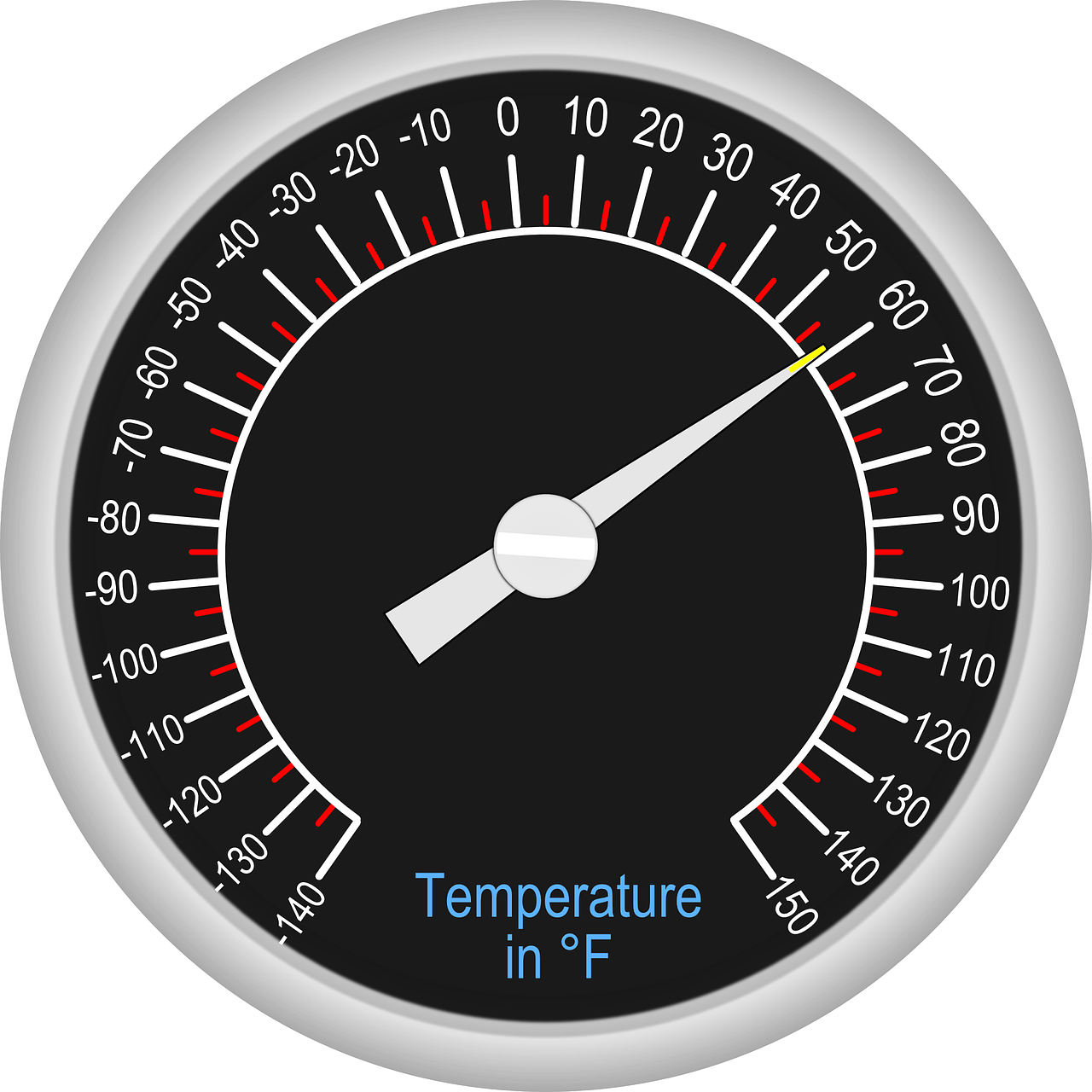
What relationship exists ( if any ) between heat and temperature? The concepts of heat and temperature are akin to the relationship between the number of moles of a substance and the molarity ( M = moles / L ) of an associated solution. Recall that a mole is a quantity of substance ( atomsContinue reading “HEAT AND THERMAL ENERGY: Fahrenheit, Celsius, and Kelvin Scales”
HEAT AND THERMAL ENERGY: Thermal Expansion of Solids and Liquids.
The subatomic structure of solids and liquids have a profound influence upon how they react to a transfer of thermal energy. Solids have a relatively fixed or rigid structure, whereas the molecular structure of liquids allows for greater expansion and compression. Measurements have shown that ( in general ) a linear relationship exists between theContinue reading “HEAT AND THERMAL ENERGY: Thermal Expansion of Solids and Liquids.”
 RENAISSANCE PHYSICS